


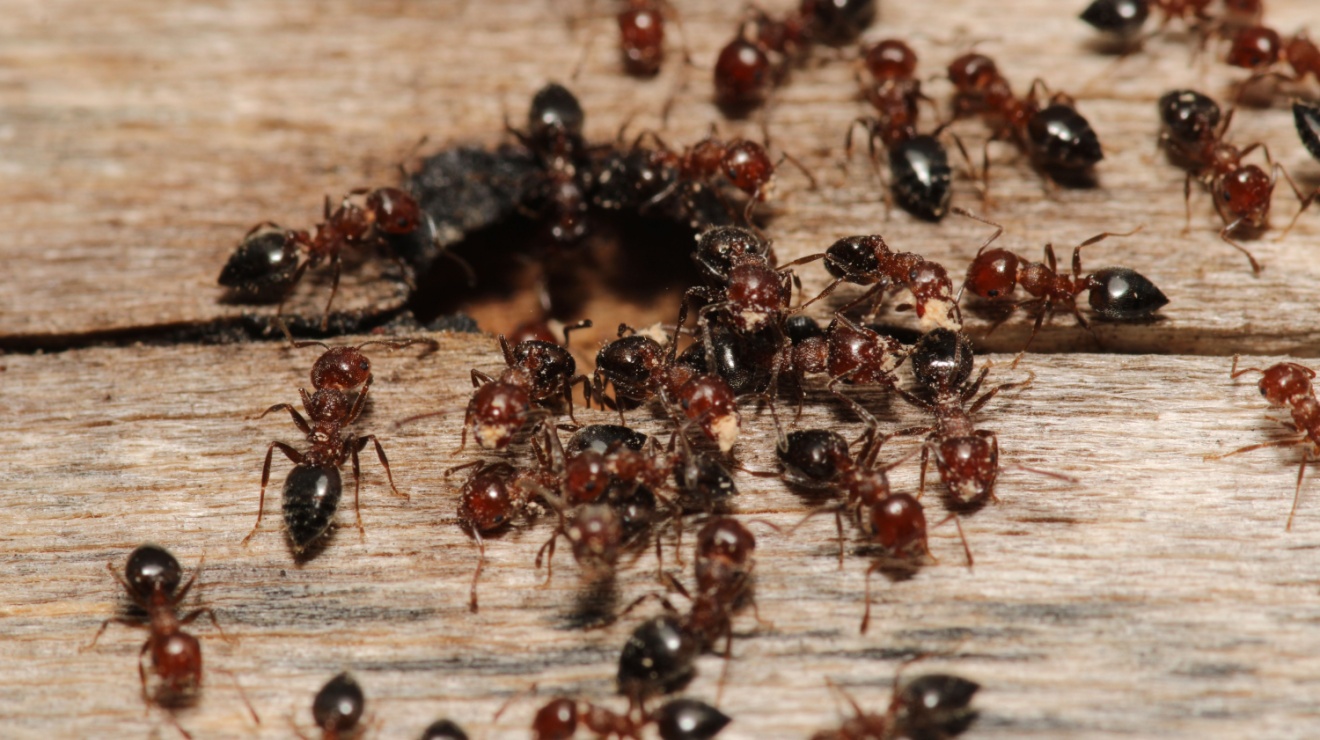
Homes near Temecula’s wine country do tend to experience more ant problems compared to other areas in the valley. The vineyards create conditions that allow ant colonies to thrive, with irrigation systems, fertile soil, and abundant food sources supporting larger populations. When these colonies expand, nearby homes become natural targets. Combined with Temecula’s warm climate and seasonal vineyard activity, this makes wine country residences especially prone to recurring infestations.
Why Vineyards Attract Ants
Vineyards create an environment that’s highly favorable to ant populations. The combination of moist irrigation systems, rich soil, and abundant organic matter provides ants with food and water sources year‑round. Grapevines themselves can attract insects like aphids, which produce honeydew—a sugary substance ants love. When ant colonies thrive in vineyard soil, it’s only a short journey for them to migrate into nearby homes.
Vineyards also provide shelter. The dense root systems of grapevines and the mulch used to protect soil create shaded, cool micro‑habitats where ants can nest safely. These colonies often remain hidden until seasonal conditions drive them outward. In Temecula’s wine country, the constant cycle of irrigation and soil management means ants rarely face resource shortages, allowing colonies to grow larger and more resilient than those in typical suburban yards. This abundance of food, water, and shelter creates a thriving ecosystem that pushes ant populations outward, making nearby homes prime targets for invasion.
Seasonal Pest Pressures in Temecula
The Temecula Valley’s climate plays a major role in ant behavior. Warm summers and mild winters allow ants to remain active longer than in cooler regions. During peak heat, ants often invade kitchens and bathrooms in search of water. In late spring and early summer, homeowners may notice sudden “ant explosions” as colonies expand and send out scouts. Living near wine country amplifies this seasonal surge because vineyards sustain larger ant populations than typical suburban landscapes.
Vineyard activity itself influences ant movement. Harvest periods and pruning cycles disturb soil and vegetation, prompting colonies to relocate. As vineyard workers adjust irrigation schedules, apply fertilizers, or shift ground cover, ants may be displaced and redirected toward nearby residential properties. These agricultural shifts often coincide with seasonal weather changes, creating spikes in household infestations that align with both farming practices and natural ant growth cycles. For Temecula homeowners, this means ant problems can intensify not only during hot months but also during key vineyard operations, making infestations more frequent and harder to predict without professional monitoring.
Common Entry Points for Ants
Even the most well‑kept homes can become vulnerable when surrounded by vineyard terrain. Ants are resourceful and exploit subtle weaknesses around a property, often in ways homeowners don’t expect.
- Foundation expansion joints: In Temecula’s wine country, soil moisture from irrigation can soften the ground near foundations. Ants use tiny expansion gaps in concrete slabs as highways into living spaces.
- Irrigation line penetrations: Vineyard‑adjacent homes often have complex irrigation systems. Where pipes or drip lines meet exterior walls, ants follow the moisture trail straight indoors.
- Stucco cracks and siding gaps: Southern California homes with stucco or wood siding can develop hairline fractures over time. These micro‑openings are ideal for ant scouts searching for entry.
- Rooflines and attic vents: Colonies nesting in vineyard soil may climb vines or landscaping, then travel upward to exploit attic vents or roofline gaps, especially during hot months.
- Garage thresholds: Garages facing vineyard terrain often have uneven thresholds. Ants slip under weather-worn seals, then spread into kitchens or storage areas.
- Outdoor entertainment areas: Patios, pergolas, and vineyard‑facing decks attract ants with food residue and moisture. Colonies nesting nearby often establish trails directly into adjoining rooms.
- Utility conduits and meter boxes: Electrical and water conduits create hidden pathways. Ants frequently nest near vineyard utility boxes and then follow wiring or piping into homes.
Prevention Strategies for Wine Country Homes
Homeowners near Temecula’s vineyards face unique ant pressures, so prevention needs to be tailored to wine country realities. Practical steps include:
- Reinforce vineyard‑facing walls: Apply durable sealants to exterior walls that border vineyard terrain, since these areas often experience the highest ant pressure.
- Redirect irrigation runoff: Position drip lines and sprinklers so excess water flows away from the home’s foundation, reducing the moist soil conditions ants prefer.
- Create gravel or stone barriers: Installing decorative gravel strips or stone edging around the home can disrupt ant trails moving from vineyard soil toward patios and entryways.
- Inspect vineyard‑adjacent fencing: Wooden fences and posts can harbor ant colonies. Regularly check and treat these structures to prevent ants from bridging into the yard.
- Limit outdoor food attractants: Wine country homes often host gatherings on patios and decks. Promptly clean up spills, crumbs, and drink residue to avoid drawing ants from nearby colonies.
- Monitor seasonal vineyard shifts: Stay alert during harvest and pruning periods, when soil disturbance may drive ants toward residential properties. Scheduling preventive treatments during these times can reduce infestations.
- Partner with local experts: Professional pest control providers familiar with Temecula’s vineyard environment can identify hidden risk zones and apply treatments designed for wine country conditions.
Professional Ant Control in Temecula
Living near Temecula’s vineyards means enjoying the beauty of wine country, but it also requires a pest control approach that understands the area’s unique challenges. Ant colonies here don’t behave the same way they do in typical suburban neighborhoods. They thrive in vineyard soil, follow irrigation systems, and surge during harvest cycles. That’s why generic treatments often fall short.
Bug Freedom Pest Control creates ant control strategies specifically for Temecula homes. Our technicians begin with a detailed inspection that considers vineyard proximity, irrigation patterns, and seasonal pressures. Treatments are then applied to both interior and exterior zones, targeting not just visible trails but the hidden colonies that drive recurring infestations.
As a veteran‑owned company, we bring a commitment to precision and reliability. Every service is backed by proactive monitoring, so homeowners can feel confident that their property is protected year‑round. Whether you’re dealing with sudden summer invasions or ongoing vineyard‑related activity, our team delivers solutions built for the realities of wine country living.
In Temecula’s wine country, ants may be a frequent challenge, but they don’t have to take over your household. Bug Freedom Pest Control offers approaches tailored to vineyard-side living, so you can enjoy the scenery without the stress of infestations. Contact us today for trusted ant control in Temecula and keep your home comfortable and worry‑free.